Find Your Training Environment
TGDC classes are designed for dancers with prior training—typically at least one to three years of experience. You don’t need to be at your peak or able to execute every skill, but you should have a basic understanding of dance vocabulary and technique.
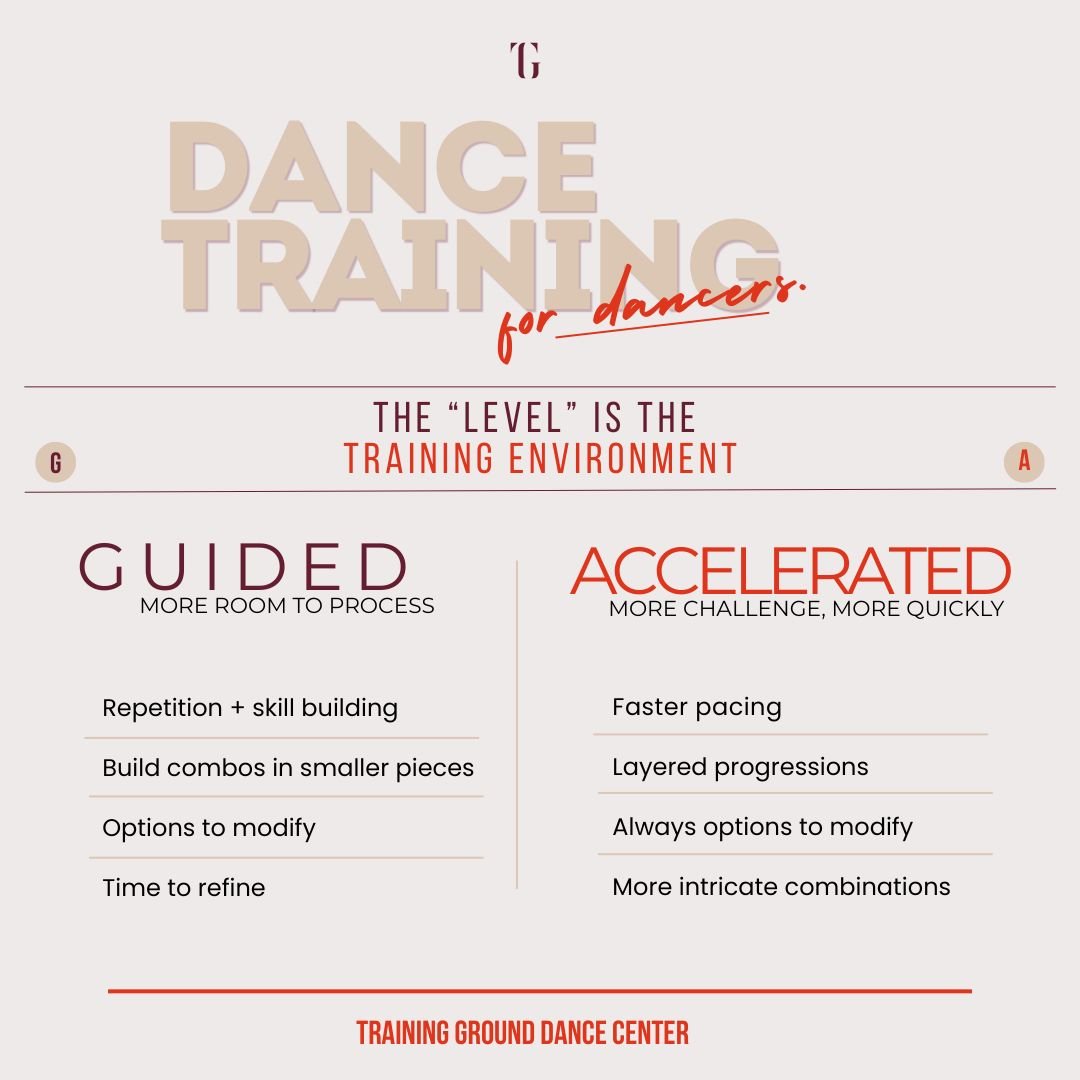
Guided vs. Accelerated
Guided and Accelerated describe the training environment, not your value or identity as a dancer. The difference is primarily in the pace, amount of repetition, complexity, and level of instructor support.
Both environments offer intentional, quality training—and experienced dancers can benefit from both.
Where Should I Start?
Choose Guided if you want more detailed growth, additional repetition, clearer breakdowns, or a supportive way to rebuild consistency and strengthen foundational skills.
Choose Accelerated if you are comfortable picking up material quickly, applying technique with less repetition, and being challenged through more intricate progressions or choreography.
If you’re unsure, start with Guided. You can always increase the challenge through your execution, performance quality, range of motion, and personal goals.
Train From Where You Are
Every dancer’s body, experience, and training season are different. Modifications are part of smart training—not a sign that you don’t belong.
Balance instead of turning. Tendu instead of battement. Stay grounded instead of leaping. You are always encouraged to make choices that allow you to participate safely and intentionally.
How Classes Are Structured
Most classes include a progressive warm-up, style-specific technique or skill work, and opportunities to apply that training through combinations, choreography, or performance.
The exact format will shift depending on the style and instructor, but every class is built around the same goal: helping you leave feeling challenged, connected, and excited to keep training.
Still Not Sure?
Start with Guided or reach out before class. We’re happy to help you find the environment that best supports what you want from your training.
Jazz
A full-out class rooted in jazz technique, musicality, style, and performance. Class may include progressions, across-the-floor work, and choreography ranging from grounded and groovy to sharp and athletic.
Jazz Technique
Train the skills that support strong, confident dancing. Class focuses on alignment, strength, turns, kicks, leaps, and progressions—with options to adjust the difficulty while continuing to work toward clean, intentional execution.
Lyrical
A movement-driven class blending ballet technique with musicality, emotion, and storytelling. Expect fluid transitions, expressive choreography, and space to explore both technical detail and authentic performance.
Musical Theatre Jazz
Character, storytelling, and classic jazz performance come together in this high-energy class. Material may draw inspiration from Broadway, film, or character-driven choreography without requiring you to portray one specific role.
Follow the Flow
A high-energy, low-pressure hip-hop class taught in a follow-along format. Movement is introduced a few steps at a time with plenty of repetition, allowing you to build a full combination while focusing on rhythm, style, and performance.
Tap
A rhythm-focused class featuring a warm-up, center work, progressions, and combinations. Steps are explored through different tempos, rhythms, and challenge options, giving dancers room to process, experiment, and keep moving.
Ballet
A casual approach to the traditional ballet class format, including barre, center work, and progressions across the floor. Focus is placed on alignment, control, musicality, and technique in an environment that feels focused but approachable.
Back to Dance
A jazz-based class for dancers easing back into training after time away. Reintroduce turns, kicks, leaps, and combinations at a thoughtful pace while reconnecting with how your body moves now—without pressure to perform like you once did.